
Luxury Packaging Design Trends in 2025

Luxury packaging design in 2025 is everything brands are investing in to appear different in the crowd. Product packaging for brands is like how your dressing defines you as a person to others. The look and feel make all the difference for a brand in today’s competitive digital-driven business landscape, where options are limitless and extremely volatile. This is where BeyondBrandMedia comes to your aid in brainstorming and creating luxury product packaging designs to create brand statements with a subtle mix of aesthetics, sustainability, technology, and emotional engagement. Let’s roll in The Power of First Impressions in the Luxury Segment The first impression of a brand is defined by its product packaging factors, such as exclusivity, craftsmanship, and attention to detail. All these factors immediately come into play the moment a consumer sees or touches a package. In 2025, the importance of first impressions is likely to be the paramount factor in the luxury brands market. As customers are increasingly purchasing online, premium packaging becomes a key touchpoint. It’s no longer just about looking beautiful on a shelf, it must create an impression like “love at first sight”, otherwise completely out of mind. Let’s explore the key luxury design trends that both emerging and known brands are likely to follow in their product packaging: 1. Smart, Convenient Packaging: With Gen Z and Millennials becoming major buyers in the luxury segment, brands are adopting technology-infused packaging to match the trend of one-touch convenience. NFC and RFID-enabled tags: Modern consumers instantly verify authenticity, access exclusive content, or even reorder products with just a tap. Augmented Reality (AR) experiences: Brands are designing AR-enabled packaging, enabling consumers to immediately scan the product for immersive brand stories, tutorials, or VIP virtual try-ons. This fusion of digital and physical enhances customer engagement through transparent and memorable interactions that extend beyond business. If you are passionate about your brainchild product’s smashing hit packaging, connect with the passionate design team of BeyondBrandMedia, the Best Digital Marketing Agency in Bangalore. 2. Multi-Sensory Experience Design: Luxury Packaging in 2025 is more than just visual appeal. The art and science of packaging now involves touch, sound, and even scent as key factors to evoke emotions. Key elements under consideration are: Textured materials: Soft-touch coatings, embossed logos, velvet liners, or hand-crafted textures elevate the luxury experience. Sound design: The ‘click’ of a perfectly engineered box closure or the rustle of fine tissue paper contributes to a premium feel. Signature scents: Some brands thoughtfully embed subtle, recognizable fragrances into their packaging to trigger emotional memory. This multi-sensory approach is a strategic inclusion to deepening emotional connection and brand loyalty. 3. Personalized packaging: In 2025 brands are prioritising hyper-personalisation in luxury packaging. It instantly strikes a chord between consumers and buyers at first sight! Examples include: Customized initials, color themes, or messages engraved on products or boxes. Limited edition artworks on the packaging of contemporary artists or designers. AI-powered recommendations for packaging design based on user data, to offer a one-of-a-kind experience. 4. Culturally-Inspired Aesthetics: As luxury brands expand globally, they are celebrating cultural narratives through packaging to honor local traditions, artistry, and symbolism. In Asia, for example, luxury skincare brands are incorporating traditional calligraphy, bamboo motifs, and feng shui-inspired design elements into their packaging. Luxury packaging inspired by the Middle East features ornate patterns, gold detailing, and rich colors drawn from heritage art. 5. Less is More Luxury: 2025 sees a rise in quiet luxury — understated, timeless elegance that speaks through restraint. Brands will focus more on muted tones like champagne gold, ivory, and sage green, over flashy color palettes. Sans-serif typography, monograms, and micro-logos lend an air of modern sophistication. Packaging focuses on symmetry, negative space, clever cuts, and balance, dismissing the dominance of AI, and sendinga clear message to the audience that the design is thoughtfully crafted by humans for humans. 6. Fruity Palette: Brands are using fruit bowl colors like lime greens, watermelon pink, and zesty yellows to infuse a burst of energy into their packaging that appears approachable at first sight. These fruity palettes not only enhance the fun element in packaging but also make it pop among the crowd. This fruity palette is now the current favorite across the cosmetic and food industry. Conclusion: Luxury packaging design in 2025 is an evolved fusion of art, technology, sustainability, and emotion. It’s now about thoughtful design that reflects a brand’s values and customer aspirations. As consumers become more picky, luxury brands are responding with packaging that is personal, purposeful, and unforgettable. Want to create such an unforgettable luxury packaging experience for your customer? Get in touch with the packaging design wizards at BeyondBrandMedia, the best luxury packaging design agency in India, and watch the story unfold.
What is Brand Positioning? An Ultimate Guide to Startups and Small Businesses
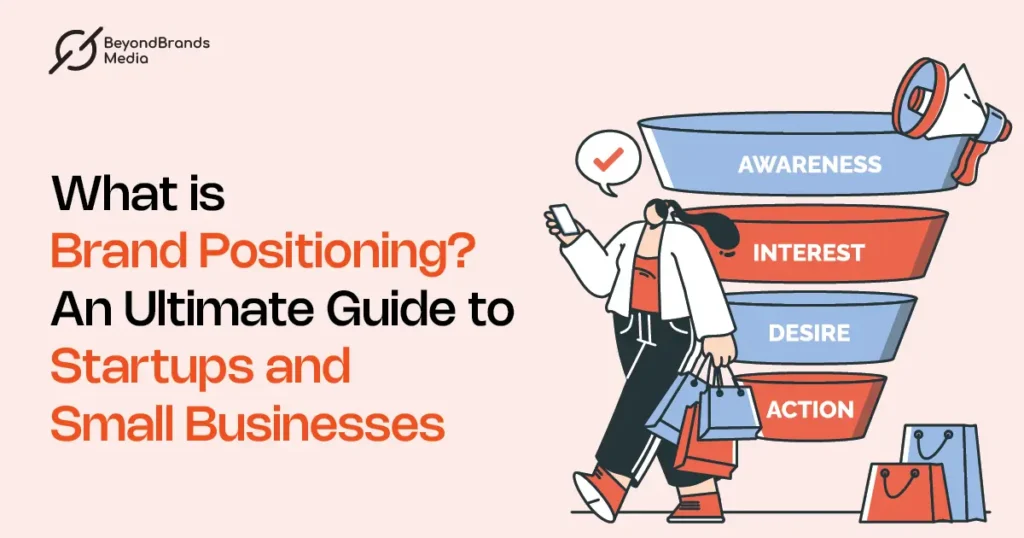
Every year, numerous entrepreneurs and enthusiastic youths are launching their startups and small businesses to make their distinct position in the marketplace. However, the goal of every start-up remains the same: to stand out amidst the crowd. When the demands of the customers are becoming endless, it appears to be extremely difficult to leave a lasting impression on the individuals. Here, brand positioning comes in handy and allows the brands to create prominence in the marketplace. Think of brand positioning not merely as a marketing tactic, but as the very act of strategically claiming your unique territory within the minds of your ideal customer base. To capture the attention of the targeted customer base, it is not enough to set yourself apart, but also to leave a lasting impact on their mind. Here in this blog of BeyondBrands Media, an eminent branding agency of Bangalore, we will take you on a trip to help you in identifying the latest brand positioning strategies that enable your brand to outpace others in the race. Let’s join this blog to know more. What is Brand Positioning? A fundamental question always lingers in the mind of the customers: “Why should I choose this brand over others?” The brand positioning here comes as an effective answer to this. At its core, brand positioning is all about creating a clear, compelling, and differentiated perception of a brand. Here comes another vital aspect, that is brand personality. Positioning of your brand is entirely dependent on the brand personality. Now you may think, “What is brand personality, or how does it shape the positioning of a brand in the marketplace?” Brand personality refers to the human-like attributes associated with your brand, and it is considered to be accountable for creating an emotional bond with the target audience. Once you are well-aware of the unique aspects attached to your personal brand, you can accordingly set a position in the market and can approach the group whose area of interest aligns with you. In today’s hyper-competitive market, if you are planning to make your brand positioning desirable, it’s important to identify the significance and every nitty-gritty aspect. The Importance of Brand Positioning Brand positioning always goes beyond a catchy slogan or some targeted marketing campaign. Rather, it takes into account every aspect of your brand. A well-articulated and effectively communicated brand position yields a multitude of critical benefits for businesses of all sizes, especially for those seeking to establish themselves in a competitive environment. Let’s explore the importance of brand positioning that helps to shape market identity. Differentiation in a Crowded Marketplace: The Indian market is already saturated with numerous options, and that’s why it appears to be extremely difficult to carve out a unique place for yourself. A strong brand position comes to your rescue and ends up making your brand memorable. Enhancing Profitability: A clearly positioned brand that effectively communicates its unique value can often command a premium price. Customers are generally willing to pay more for a brand they perceive as superior or uniquely suited to their needs. For the ones who are willing to maintain a healthy profit margin despite having a small business setup, we recommend focusing on visual branding that boosts the identity and paves the path for creating the best market position. Building a Strong Brand Identity: Consistent and effective brand positioning over time aids in creating a positive association with the customers and leaves behind an unforgettable impression. To consolidate the brand identity, increase brand awareness, which in turn will contribute to the long-term success and resilience. Informing Product and Service Development: Believe it or not, but your brand position is strongly rooted in understanding the exact needs of your targeted consumer base. This process also guides the process of developing new product or service offerings to strengthen your unique value proposition. Attracting and Retaining the Right Set of Customers: Customers are the most valuable assets to entrepreneurs, and for this reason, it is of utmost importance to attract and retain them. Effective positioning here helps to ascertain that your messaging resonates with those who truly value your brand’s uniqueness. So, gear up to craft an effective positioning strategy to get noticed in the market and to retain consumers for a long period. Ways of Building a Powerful Brand Positioning Plan for Small Businesses Worried about creating a powerful brand that keeps the consumers hooked throughout? It requires a multifaceted approach and encourages you to rightly understand the audience while communicating your unique values. Here are our tips to build a brand that everyone remembers. Deeply Understand Your Target Demographics: Sticking to the demographics is not going to serve your purpose, and it takes into account psychographic aspects to understand the values, lifestyle, aspirations, and others. To create a vivid impact in the mind of the customers, you need to dive deep into the other details. Conduct a Thorough Competitor Analysis: No matter whether you are moving towards a particular niche or a broader sphere, a competitor analysis is mandatory to map out both the direct and indirect competitors. During this process, you will gather valuable insights on the target market, strengths, and weaknesses. Look for unmet needs or underserved segments within the broad marketplace that your brand can uniquely address. Define Your USP: Now it’s time to outline your Unique Value Proposition in the marketplace so that consumers can recognise how you are going to address their problems. People may have a question in their minds, “What makes your brand stand out?” It can be anything like your mission, exceptional service, localised features, outstanding quality, and so on. Pick a Positioning Strategy: Once you are done identifying your USP, it’s your turn to identify a positioning strategy such as price based positioning, quality based positioning, quality-based positioning,social media positioning, niche based positioning and others. Weave a Powerful Brand Story: Start weaving a powerful story for your brand that leaves the customers mesmerised once they come to know it. In turn,
Brand Tone of Voice: Understanding the Nuances In Detail
In a world saturated with numerous brands all around, it feels like a difficult task to set your own brand apart from others. Do you still think that having a compelling product or service offering is enough? Not at all. To truly cut through the noise, resonate with your audience, and forge lasting connections, you need something more: mainly a distinct brand tone of voice. Just like humans, brands too have their personality that can be expressed through their unique tone of voice. When it comes to branding, having an innovative approach is absolutely essential. Just imagine you are in a bustling marketplace, and each vendor has their unique way of appealing to the customers. Each vendor will have their distinct voice to build a significant connection with the passersby. But what are the ways of establishing a brand voice and tone to attract the attention of the target customers both online and offline? This blog of BeyondBrands Media, a branding agency in Bangalore, will dive into the nitty-gritty aspects of creating a brand tone of voice. What is the Brand Tone of Voice? Have you ever thought about what sets you apart from the rest of the others? Yes, it is none other than your personality or your unique tone that allows individuals to create a unique identity. Just like you, your personal brand must have a unique voice to leave a lasting impact on the minds of the targeted demographics. When you heard the name “PUMA,” what instantly came to mind? It’s definitely the FIFA World Cup 2022 campaign. Here, the success of branding lies as through a campaign and its specific tone, this eminent footwear brand has left its imprint behind, and it is still vivid in the mind of the audience. Brand voice is not only about a tagline or a logo, but it’s a collection of aspects to create a distinct identity. Significance of Brand Voice: When you hear the commercials featuring the taglines like “ Just Do It”, how do you feel? It feels amazing how a simple logo or a mere tagline instantly reminds us of a brand. Here is why it becomes absolutely important to help your brand create its unique footprint that the audience will remember forever. Let’s unravel the reasons that enable the brand voice to occupy a dominant position. Establishing a lasting connection: For creating meaningful relationships or for strengthening the voice, all you need is the right selection of words. To create a remarkable brand tone of voice, you need to come up with words that resonate with the target audience and bring real-time connections. Helping to stand out from the crowd: A brand voice will undoubtedly help in standing out from the crowd and getting the attention of the targeted customers over there. Honing the process of branding and communication Almost all of us these days are aware of the importance of branding, as it is a crucial procedure for increasing awareness about the brand in the marketplace. Be it marketing communication or corporate communication, your brand tone of voice will be your only weapon to ace them all with ease. Forming brand identity: The voice of your brand undeniably endows it with a distinct identity on various platforms, and in turn, it also strengthens the presence. How Brand Voice Is Associated With Brand Personality? Brand voice and brand personality are two closely intertwined concepts that together form a crucial part of a brand’s identity. If you are still in doubt about what brand personality is, here we are going to elucidate the concept for you. Think of brand personality as a character of your brand, and brand voice, on the other hand, is how that personality expresses itself via language. For a brand to be perceived as authentic and consistent, its voice must be a genuine reflection of its underlying personality. A disconnect between the two can lead to confusion and distrust among the audience. For instance, Apple, being a luxury brand, has set its voice accordingly; otherwise, it would have created confusion. In essence, brand personality is who your brand is, and brand voice is how your brand speaks. Top Tips to Build Your Brand Voice Building a strong brand and delivering the best brand experience is not at all an easy job; rather, it also entails intention and effort. Let’s move to the pointers below for building a strong brand. Indulge in careful branding practices: Before crafting a brand voice, it appears to be one of the most compelling aspects to know who you are or what your brand is all about. Understanding your personality is the bedrock upon which the voice will be built. Choose the logo and every other element carefully for effective visual branding. Know your audience entirely. Still not sure who you are trying to reach? We recommend that the Segmentation-Targeting-Positioning framework resonate with the people. Choose your words strategically. In branding, every word counts, and that is why select the words carefully so that they reflect the brand personality in a proper manner. Be consistent across all platforms. Your brand voice shouldn’t change dramatically depending on where you’re communicating. While you might adapt your format and content for different platforms, the underlying tone must be consistent. Otherwise, the brand personality might get affected. Train your team to embody the voice. Whether it’s someone from sales or marketing, every member of your team must have a clear idea about your brand’s tone of voice to communicate accordingly. So, train your team from the beginning. Key Takeaway In the commercial arena, your brand voice is a powerful asset that enables you to create your own territory. Plus, the brand’s tone of voice takes part in creating a distinct personality. So, to find an authentic and unique hum, set a brand voice and let your brand speak louder. To get more such insights on brand personality, voice, branding, or marketing ecosystem, visit the website of BeyondBrands Media. Brand Tone of Voice
SEO VS Google Ads: The Right Balance for Your Website

In 2025, can you imagine a single day without online presence? Of course not, and here is why having an online presence is crucial for business endeavours. Once you have created your presence online, it’s not enough at all. Imagine you are taking part in a competition and to win over the rival counterparts, will it be enough to just mark out the territory? It’s absolutely necessary for your brand to show up first when the target group of consumers is making queries online. To appear in the top 3 of Google’s online ranking, which is the most important SEO or Google Ads? If you have this question in your mind, then you are at the right place. The debate of SEO vs Google Ads has no end at all, as for keeping the website online traffic flow, both of these ingredients are required. Here in this blog of BeyondBrands Media, the best digital marketing agency in Bangalore, we are going to encompass the importance of both SEO and Google Ads and how they add to the SERP dominance when it comes to honing the brand identity. Fundamentals of SEO: In today’s digital landscape, having a website is just the first step. To truly thrive and reach your target audience, you need to be visible amidst the vast ocean of online content. Here, Search Engine Optimisation or SEO comes in handy. At its core, SEO is all about the process of organic optimisation of the website so that it can rank high automatically in Google SERP. Once the existing search engines begin to understand, crawl, and index your content, they are more likely to appear on the first page for the relevant queries. This degree of increased visibility in reality translates to more organic traffic for proceeding towards higher engagement and better conversion. However, if you consider digital marketing for small businesses, SEO should be the first and foremost aspect to take into account. Let’s dive into the section below to find out what SEO involves to contribute to the overall integrity of the website. On-page SEO: On-page SEO is all about optimising the individual pages within the website by incorporating the right set of keywords and headings, and meta tags. Such strategic steps help the entrepreneurs to enhance the website’s visibility. Remember that the importance of digital marketing lies not only in its ability to create mere market awareness, but also to establish a meaningful relationship with the target demographics. SEO as a significant part of digital marketing is the incorporation of strategies like curating compelling and keyword-rich content, optimised titles and meta tags, internal linking, image optimization, and enhancing the website speed and performance. If you are ready to embrace on-page SEO for your brand, keep in mind that it is not a standalone way but an amalgamation of multiple aspects to contribute to the desired results. Off-page SEO: Once you are done with the on-page activities, here comes the turn to conduct off-page SEO activities by moving outside your own website. The most crucial part of off-page SEO is to build authority in search engines through link building. No matter how advanced the world becomes, the latest digital marketing trends will always include the off-page activities. Backlinks refer to the links from reputable websites to your own website. We suggest focusing on earning top-quality backlinks by weaponising the high-end content for better outreach. Technical SEO: Last in the list are technical SEO tactics that allow the search engines to crawl and index the content effectively. This part of SEO includes robots.txt, XML sitemaps, schema markup, canonical tags, and HTTPS security. If you think SEO is a one-time task, you are moving in the wrong direction, as SEO needs ongoing efforts from the end of the team of experts to achieve the desired goals organically. Benefits of SEO: Now, let’s move to the frequently asked questions of the business entrepreneurs that why SEO is a game-changer and how it helps to improve the organic rankings. Have a look at the pointers below to find out the unmatched benefits associated with SEO. Cost-effectiveness: Forget your fear that SEO endeavours may burn a hole in your pocket. Unlike traditional marketing campaigns, it’s absolutely cost-effective for both the established and small brands out there. However, the initial SEO efforts require a certain amount of money. To take your brand to the SERP, SEO is here to become your ideal choice. Brand Building: Consistent appearance in search results helps the websites to attain a desirable position and to adhere to the principles of authoritativeness, trustworthiness, and relevancy. So, if you are looking to improve your brand value and recognition, the best way is to utilise the SEO-optimised content for fostering positive user experience. Organic Traffic: When it comes to sustaining in the competitive commercial landscape, the smooth inflow of organic traffic is all you need. All you need is to optimise your high-quality SEO friendly content with high-search volume keywords to fetch organic traffic and to let your website reign over the others. Long-term Sustainability: Just like SEO is an ongoing process, it demands a great deal of time to ensure lasting results. For showcasing the authority of your website and to keep its relevance intact, SEO has no other alternative. Limitations of SEO: Like that of the other stuff, SEO too has its perks and downsides as well. Let’s get acquainted with some of the setbacks of this digital marketing approach. Time Consuming: Unlike paid advertising, which can deliver immediate traffic, organic ranking improvements often take weeks, months, or even longer, especially for competitive keywords and new websites. Believe it or not, but for desired SERP rankings, you need to wait a while as search engines need the right amount of time for crawling, indexing, and understanding your website and its content. However, for the entrepreneurs in need of immediate results, SEO can appear to be frustrating. No Guarantee of Results: Despite the most diligent efforts, the most coveted position
Social Media Optimization Techniques to Improve Your Online Growth
The benefits of socialization need no introduction. We (humans) socialize to stay connected, expand our network and stay relevant. Similarly, today’s businesses are also socially thriving through various social media optimization techniques that keep them connected with the audiences and relevant. Needless to say, Social Media Optimization (SMO) has become a crucial aspect of digital marketing that ensures businesses get the most out of their social media accounts. A well-executed social media strategy can lead to social media marketing success, helping businesses achieve their goals efficiently. Whether you’re a branding agency in Bangalore or a global enterprise, implementing the right social marketing methods can elevate your business to new heights. In this blog, we’ll delve into the best social media optimization strategies to boost your brand’s online presence. The Importance of Social Media Optimization (SMO)Technique Before diving into social media techniques, it’s essential to understand why optimizing social media accounts is critical for businesses today. Today 88% of businesses rely on social media to connect with their audiences. From product launch to solving consumer queries with a personalized approach. Businesses prefer a transparent approach to social media to become a consumer-first brand based on the right optimization technique. By optimizing content, profiles, and interactions, you attract the right audience, drive traffic, and build meaningful connections—turning followers into loyal customers. Essential Social Media Optimization Strategies 1. Define Clear Goals: Setting clear and measurable Social Media Goals is the foundation of any successful campaign. Goals may include: Boosting brand awareness Generating leads Driving quality website traffic Enhancing customer engagement Boosting sales A well-defined social media strategy aligns your goals, complementing your target audience’s needs- leading to higher engagement and conversion rates. 2. Optimize Social Media Profiles: Your social media profiles act as digital storefronts for your brand. To maximize their impact: Upload high-resolution profile and cover images. Write compelling bios with relevant keywords such as Digital Marketing Services and Social Media Optimization Services. Feature website links and contact information. Ensure consistency across all platforms. 3. Leverage a Social Media Content Calendar: A concrete Social Media Content Calendar helps in scheduling and organizing posts to maintain consistency. Benefits of using a content calendar include: Avoiding last-minute content creation. Ensuring a mix of content formats (videos, blogs, infographics, etc.). Aligning posts with marketing campaigns and trends. 4. Create Content that Creates Credibility: Content is the heart of any social media technique. Businesses should focus on: Creating stunning graphics and videos. Sharing people-first purpose-driven blog posts. Engaging users through polls, quizzes, and contests. Posts user-generated content to build credibility. 5. Implement Hashtag Strategies: Hashtags are essential for improving discoverability. A proper social marketing method involves: Using branded hashtags to promote campaigns. Researching trending industry hashtags. Mixing popular and niche hashtags for a wider reach. 6. Utilize Social Media Advertising: Organic reach alone isn’t enough in today’s competitive market. Drive the deals through strategic paid advertising on platforms like Facebook, Instagram, LinkedIn, and Twitter, benefiting your brand with Targeting specific demographics. Boosting visibility and engagement. Generating leads and conversions. 7. Engage and Interact with Your Audience: Engagement is essential for social media marketing success. Best practices include: Engaging in real-time conversation Conduct interactive campaigns such as Q&A sessions. Engaging in industry-related discussions. Personalizing responses to build stronger relationships. 8. Track and Analyze Performance: Continuous monitoring and analysis of social media performance is crucial. Using tools like Google Analytics, Facebook Insights, and Twitter Analytics, businesses can: Identify do’s and don’ts Adjust strategies based on audience behavior. Optimize content for better engagement. 9. Collaborate with Influencers: Influencer marketing is a powerful social media optimization strategy that can amplify brand reach. Collaborating with relevant influencers helps in the following: Gaining credibility and trust. Reaching new and targeted audiences. Increasing engagement through authentic endorsements. 10. Keep Up with Social Media Trends: The Future of Social Media Marketing is ever-evolving and keeping up with the latest trends is essential, such as: AI-driven social media marketing automation. Short-form videos (reel). Growth of social commerce and in-app purchasing. Emphasis on sustainability and brand ethics. The Role of a Branding Agency in Social Media Optimization Whether you are new in the league or an old player, businesses often seek expert guidance to streamline their Social Media Optimization Services. But only a reputed branding agency in Bangalore like BeyondBrands Media can help you through our tailored assistance that includes: Develop a tailored social media strategy aligned with business goals. Create high-quality content that resonates with the audience. Monitor analytics and optimize campaigns for better ROI. Run paid campaigns that deliver measurable results. Conclusion: Effective social media optimization strategies can transform a business’s online presence, drive engagement, and boost sales. Whether you’re looking for comprehensive Digital Marketing Services or a dedicated Branding Agency in Bangalore, investing in Social Media Optimization Services ensures long-term success. By defining clear Social Media Goals, leveraging the right social media technique, and keeping up with trends, businesses can maximize their impact. The Future of Social Media Marketing is promising, and those who optimize strategically will stay ahead of the curve. Looking for professional Social Media Optimization Services? Partner with BeyondBrandsMedia, your trusted Digital Marketing Services Company to take your brand to the next level! Social Media Optimisation Techniques FAQ: Q1. Why is social media optimization important? Social media optimization (SMO) enhances brand visibility, engagement, and reach by optimizing content for better performance. It helps attract the right audience, increase website traffic, and improve conversions. Q2. What is the difference between SMO and SMM? While SMO (Social Media Optimization) focuses on organically enhancing a brand’s presence by optimizing social media profiles and content SMM (Social Media Marketing) utilizes paid strategies, such as targeted ads, to actively promote products or services and drive specific marketing goals. Q3. How to optimize your social media
What is Brand Personality, and How Does It Define?
Have you ever thought about what enables you to opt for Starbucks coffee or grab an iPhone to set a status symbol? The secret lies in the art of the brands about setting their personality in a way that leaves the audience spellbound. Plus, this attribute also hooks the audience and compels them to embrace these brands as their all-time favorite. The brands put all their efforts and often indulge in aggressive marketing practices to create an unforgettable brand personality. Are you still confused about what is brand personality, or how it leaves an impact on the overall business operation and sets it apart from the rest of the others in the market? If yes, then you are not alone, as many people have the same confusion. Here in this blog of BeyondBrands Media, an eminent branding agency in Bangalore, we are going to cover the significant discussion related to branding and brand personality. Join us on this journey to come up with significant insights. The Fundamentals of Brand Personality Brand personality is the captivating essence that transforms a mere product into a relatable entity. Just like people, brands possess unique traits—think of them as the human characteristics that consumers connect with emotionally. This concept is crucial in today’s competitive marketplace, where a strong brand personality can set a company apart and foster deep connections with its audience. At its core, the purpose of branding personality is to create a connection with the audience on a personal and emotional level that lasts long. A well-defined brand personality is not only conducive for attracting a huge base of consumers, but also helps to cultivate loyalty at the same time. In this context, it is worth noting that if your present brand personality fails to leave a lasting impression in the mind of the audience, it’s time to opt for rebranding practices to revamp the identity entirely. Ready to ponder over the key traits that add to the importance of branding? Scroll down to find out more. Key Traits of Brand Personality Just like the other aspects of marketing, brand personality too has some significant attributes. If you are interested in gaining an in-depth knowledge of brand personality, here, have a look at the Taker five-dimension model. Understanding these traits is highly important as it will help you to direct your sole focus on a single direction for weaving a unique brand strategy. Let’s get started with it. Sincerity: There are dominant brands like Disney and Patagonia in the market, and these brands are known for their sincere efforts and down-to-earth personalities. This aspect also encourages the audience to relate it to their own life. For instance, Patagonia’s famous “Common Thread” initiative has allowed people to reduce the amount of clothing waste. This popular advertisement came as a form of message of consciousness to the audience out there, and it also consolidated the brand identity of Patagonia. If you are considering establishing your brand, endowing your business with such tenets can help you out. Excitement: Besides a sincere approach, there are plenty of brands in the marketplace that have a distinctly imaginative and exciting personality. For instance, Nike has positioned itself in a way that it can mirror the athletic excitement and unparalleled spirit of the young athletes. From the famous slogan “Just do it” to collaboration with eminent athletes, the status of this brand. To set a new tone of voice for branding endeavors, the wisest idea is to rightly express the excitement through the advertisement initiatives. Competence: Thirdly, there are few brands in the market that take pride in establishing their image as competent brands for their high values and top-quality work. On the other hand, companies like Microsoft and UPS project reliability and intelligence, instilling confidence in their capabilities. Sophistication: Another notable trait of brand personality includes sophistication and the best part is that the high-end brands such as Apple and BMW through their visual branding and other activities pose themselves as sophisticated, exuding elegance and luxury all at the same time. For people who are fond of luxury and opulence, this note of sophistication in the logo and other branding endeavors can take a brand to a high level. Ruggedness: Last but not least, ruggedness is another vital attribute that some brands take into account for setting a unique identity. For instance, brands like Jeep and Harley-Davidson resonate with those audiences who tend to prefer toughness the most. Why Does Brand Personality Matter? We are living in an era where the brand personality reigns supreme and influences the purchasing decisions of consumers. The reason behind it is simple people these days only seek authenticity and even the research has established that 88% of people prioritise authenticity over anything else. Brand personality is not just about how a brand looks or sounds; it’s about how it makes consumers feel. To create a compelling brand, it is important to create an emotional tie with the target audience so that they can expect a value both material and non-material value while purchasing a product or service offering. Brand Personality FAQs: What is a brand personality statement? A brand personality statement is in reality a clear articulation of the traits that define a brand and set it apart from the others. It also serves as a guiding framework for how a brand interacts or communicates with the target audience group. For instance, if you are creating a luxury brand, it is a must-have aspect to reflect this sense of sophistication through visual identity and other aspects. How does brand personality differ from brand identity? Brand personality embodies the values, beliefs, and tone of a brand. On the other hand, brand identity focuses on how a brand presents itself to the world and is crucial for establishing recognition and differentiation in the marketplace. Why is brand personality essential for customer loyalty? Brand personality utilises the emotional connection, creates consistency and influences the positive word of mouth for enhancing the
A Guide to Creating a Free Social Media Content Calendar, 2025

Have you ever imagined how it would turn out if you borrowed some money or took a loan from somewhere without a strategy of repaying it? Isn’t it extremely unrealistic? Yes, it is, and the same theory is applicable in the context of social media marketing. When you are on a social media platform, it is absolutely a necessity to stay ahead of the others in the market. Otherwise, it will leave a detrimental impact on your business as a whole. The magic lies in a well-crafted social media content calendar—a strategic roadmap that ensures consistency, creativity, and connection with your followers. In 2025, it is not at all a big deal to create a social media calendar. Here in this blog of Beyond Brands Media, the reputed branding agency in Bangalore, we will encompass the tips to create a social media calendar. Let’s start. Overview of a Social Media Calendar Social media is always a dynamic sphere and to stay ahead of others, all you need is a proper tool that can schedule and organize the content that needs to be posted across the varied platforms. A calendar for social media content is a highly beneficial factor, and it acts as a strategic roadmap for planning, organization, and final visualisation. Before starting a campaign on social media, by checking this calendar, you can get a clear idea about the scheduled tasks for the upcoming days or months. Whether it’s a digital calendar or a spreadsheet, a social media calendar ensures that all your content is delivered consistently and aligned with the marketing goals. Here’s why every marketer needs a content calendar to revolutionise the social media marketing operation. Benefits Of Having A Social Media Calendar Having a content calendar is always important to keep you way ahead in the race of business. If you are still in a dilemma of why you need to keep a content calendar for social media in place, here we have our answers in this blog to guide you thoroughly. Scroll down to get acquainted with the benefits of having the best social media content calendar with you. Time Saving Saving a significant amount of time is a crucial part of social media marketing so that you can invest your sole focus on experimenting with different content forms. Once you have a social media content calendar, you can plan or schedule the posting in advance. This can absolutely be a saviour for the marketers and save them from the last minute hassle which often results in missing the deadline. Plus, advance scheduling will help you to bid adieu to the stress of daily posting. When you get all your clothes organised in a single place, isn’t it delightful? Yes and the same thing happens with the social media marketers as well, when they find all the content organised in a single place, they can accordingly plan out the campaigns. Consistency in posting schedule A social media content calendar ensures a consistent posting schedule, which is vital for maintaining audience engagement and trust. To stand out amidst the crowd in social media, all you need to do is be consistent enough to maintain the relationship with the audience. When the content is planned ahead, it becomes an easy-breezy task to maintain the consistency in brand voice without lacking the quality. Improves quality Proactive scheduling leads to better content review and to sniff out the potential errors. It guarantees the content of top-notch quality. Even when it comes to crisis management, a social media content calendar is second to none. This tool in reality enables a quick adjustment to planned content during the crisis period. Cross-functional collaboration A social media content calendar offers a clear overview of the upcoming content to be posted on social media platforms, and in this way it facilitates cross-functional collaboration to align with the objectives and timeline of every team. Supporting strategic planning A social media content calendar helps to track which types of content perform best, allowing you to adjust your strategy based on real data rather than intuition. In this way, it encourages the strategic thinking of the marketers. So, if you are planning to experiment with social media campaigns, this calendar can be a go-to tool for you. Types of Social Media Calendar Social media content calendars are available in diverse forms, and each one is designed in a way to mitigate specific strategies and needs. Here are some of the common types of social media calendars that are mentioned below. Dedicated Social Media Calendar This type of calendar in reality focuses solely on planning and scheduling of the social media content. The best feature is that it can be customised based on the nature of the platform and as per user needs. Weekly or Monthly Calendar This type of calendar template offers a layout on a weekly and monthly basis and is extremely easy to use. For both personal and business purposes, it can be a great tool. Omni channel calendar This type of calendar integrates all content across multiple channels, including social media, blogs, and email newsletters. It provides a comprehensive view of your content strategy and ensures consistency. Editorial Calendar Editorial calendars can be used for social media to plan and organize the campaigns around specific themes. Customisable Calendar These calendars leverage the automation feature in order to create custom content plans that resonate with the target audience base. Tips to create a social media calendar Creating a social media content calendar can be fun when you know the tips of doing it without any hassle. Let’s dive into the below tips and tricks to create a functional calendar. Choose the right template Stick to the free templates derived from the platforms like Asana, Buffer, Smartsheet, and others. These templates have their customisable features and can easily adapt to the style of the brand. Besides, there are a few layouts which can help you to decide whether you need a monthly chart or a
Content Marketing Vs Traditional Marketing: Which is More Effective in 2025?
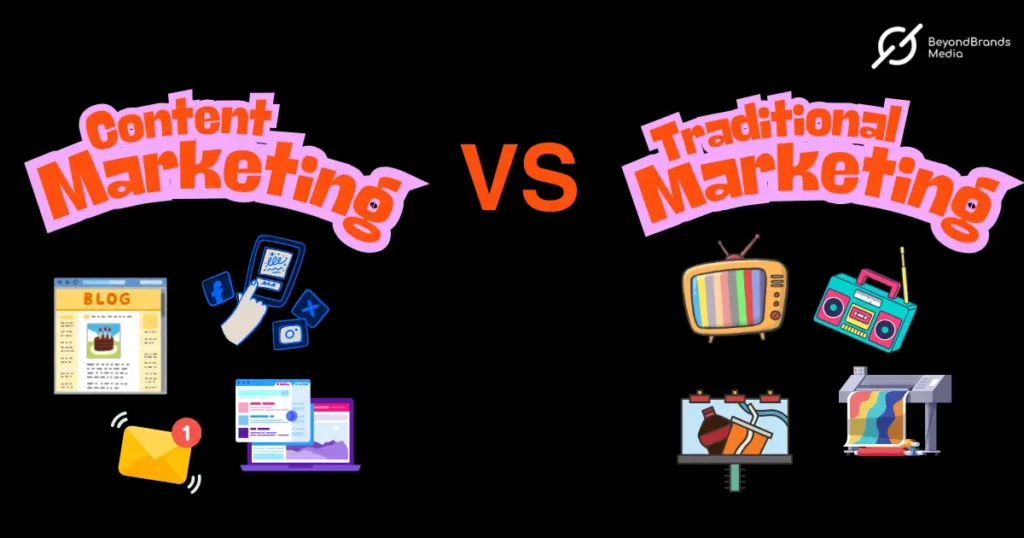
Have you ever found yourself caught between two binaries? Such situations are nothing new to you, especially if you are a business owner. But if you are concerned about content marketing vs traditional advertising, then it’s a difficult task to settle for one. Fret not, as this debate too can be resolved, and we can help you out with a holistic approach that outperforms the other counterpart. Whether it’s a small endeavour or already a thriving business, it is essential to stick to a winning approach. The most intriguing aspect of content marketing is to tailor the advertising or broader marketing campaigns exclusively so that it reaches only your chosen audience segment. In 2025, business owners are still in doubt about which marketing will suit their business and how they can find the best one. Here in this blog post of BeyondBrands Media, the best digital marketing agency in Bangalore, we will discover the underlying differences between traditional and content marketing and which one should be your pick in 2025. Let’s get ready to start. The Idea of Content and Traditional Marketing Content marketing and traditional advertising approaches both have their own significance when a business is concerned. Traditional marketing refers to the advertising of products or service offerings via the conventional mediums such as TV commercials, billboards, radio ads, and so on. On the other hand, content marketing is a distinct part of digital marketing that, instead of bombarding sane ads on everyone, identifies the targeted segment and accordingly tailors the content for maximum impact. Content marketing services are aimed at educating and entertaining a range of audiences through unique forms like short video reels, articles, or maybe some crisp infographics that do not consume a huge amount of the audience’s time. While traditional marketing is a one-way approach, content marketing works in both ways, and it entails a personalised way that tends to differ from one audience base to another, depending on the interest and preferences. Just imagine you are merchandising trendy t-shirts that are unisex. In such a context, it will serve no purpose if you choose to advertise it traditionally. The sole reason for it is simple: the target audience segment of the t-shirts is mainly the new generation youngsters who are usually occupied with social media most of the time. Here’s why you will feel the dire need to create reels or short videos to display your products to capture the attention of the consumers over there. Once you are acquainted with these two approaches and their fundamentals, half of the debate of content marketing vs traditional advertising gets resolved in no time. Now, let’s move to the next section of this blog to find out the nitty-gritty aspects associated with these two dominant marketing approaches. The Key Differences Between Content and Traditional Marketing In the dynamic world of marketing, the landscape has transformed dramatically over the past few decades. What was once a straightforward process of broadcasting messages to potential customers has evolved into a sophisticated art of engagement and interaction. At the heart of this transformation, all you need is a consolidated approach that can help your business stay afloat. Take a look here at the underlying differences of two approaches to formulate the effective marketing strategies for your endeavour. Nature of Content: Traditional advertising, being an old school version of marketing, has only one tone that is promotional, and that is why it will only persuade the audience to buy by recognising the benefits attested with a product or service. On the other hand, the agencies that specialise in content creation services will leave no stone unturned to appeal to the audience uniquely. Here, the tone of content will differ based on the audience base. Through content marketing services, you can educate, engage, and even interact with your audience. This particular counterpart of marketing encourages two-way communication and builds meaningful relationships that work in the long run. Media and Channels: Traditional advertisements often remind us about the bygone eras when viewers were only limited to mediums like TV, radio, billboards, and direct mail. For this reason, traditional ads are majorly found in such platforms that target a broader audience base. Deviating from this path, the content marketing professionals are opening up a wide vista of channels in front of the audience base. It weaponizes multiple platforms from social media to websites, email newsletters, videos, and podcasts. Effectiveness and Strategy: When it comes to effectiveness, traditional advertising is only suitable for the brands that are looking to reach out to a broader audience base. Plus, it also takes part in leaving a lasting impression on the minds of the viewers with its immediate visibility. Besides, content marketing thrives in every field, and it focuses on nurturing leads through sustained engagement. For instance, once you watch a reel of an apparel brand, if you find it interesting, you will immediately visit the official social media page of the brand to place orders. It will never feel like someone is delivering a mere sales pitch with the motive of pushing you towards buying. Cost: Traditional advertisement can never be a game changer for the smaller brands that are striving to make their way in the dynamic landscape of business. The reason is that a high cost is associated with it. On the other hand, content marketing is for everyone, as the strategies can be tailored to your budget. Consulting the best digital marketing services company can offer a roadmap of how to utilise the content for making the public aware of your brand and its offerings. Whether your brand is struggling or thriving, all it needs is a winning content strategy to stand out. Which Approach is Ideal for 2025? 2025 is a year that demands a refined version of your brand, and the modern age customers are also inclining towards the ones that can offer them the original value in return. In such a situation, there can be no alternative to content
The Future Trends in Digital Marketing: Dominate Bangalore in 2025
Forecasting the future trends in digital marketing is challenging, but anticipating the shifts that will redefine marketing can be a game-changer for today’s marketers. Digital marketing trends shift overnight, prompting marketers to reframe and tweak strategies to meet the predefined success goals. So much so is the level of competition that even Bangalore, India’s hotspot for digital transformation, makes it imperative for businesses to leverage cutting-edge digital marketing strategies. Whether you’re a startup, an established brand, or a digital marketing services company, understanding and implementing future trends can help you dominate Bangalore’s competitive market in 2025. Top 10 Future Trends in Digital Marketing 1. AI-Powered Digital Marketing Strategies: Artificial Intelligence (AI) is revolutionizing digital marketing’s future. Marketers are utilising AI-powered tools that can analyze vast amounts of data, to craft highly personalized experiences. Plus, Machine learning algorithms help predict consumer behavior, optimizing campaigns in real-time for better engagement and conversions. The Best Digital Marketing Agency in India like BeyonBrandsMedia leverages AI-driven insights to refine customer targeting, automate responses, and enhance the efficiency of advertising strategy. It’s just a matter of time, Chatbots, predictive analytics, and AI-powered content generation will become standard practices in 2025. 2. Voice Search Optimization: With the rise of smart assistants like Alexa, Google Assistant, and Siri, voice search is becoming a game-changer. By 2025, a significant portion of searches will be voice-based, making it essential for businesses to optimize content accordingly with long-tail keywords and phrases. To help your business match the trend, only a top-tier digital marketing services company in Bangalore can help by optimizing content for conversational queries and natural language processing (NLP) to ensure higher rankings on search engines. Implementing long-tail keywords and question-based content will be crucial for capturing voice search traffic. 3. Dominance of Video Marketing & Short-Form Content: Video content continues to be one of the most engaging formats in digital marketing. Platforms like YouTube Shorts, Instagram Reels, and TikTok have proven that short-form videos drive high engagement and brand awareness. Plus the latest integration of AI tools Veo for YouTube shorts will further heighten the dominance. In 2025, businesses will need to prioritize video marketing as a crucial part of their digital marketing strategies. Live streaming, interactive videos, and personalized video content will play a crucial role in audience engagement. Brands that effectively integrate video marketing into their advertising strategy will see significant returns on investment. 4. Hyper-Personalization in Marketing Campaigns: Consumers in 2025 will expect tailored experiences that align with their preferences and behaviors. Personalization goes beyond using a customer’s name in an email; it involves curating content, recommendations, and offers based on real-time data. Modern Digital marketing services companies will leverage AI, big data, and predictive analytics to deliver hyper-personalized marketing campaigns. From email marketing to social media ads, businesses that adopt personalized marketing strategies will create deeper customer connections and drive higher conversions. 5. The Rise of Influencer & Micro-Influencer Marketing: Influencer marketing has been a game-changer in shaping digital marketing’s future. However, the focus is shifting towards micro-influencers who have a more engaged and niche audience. In Bangalore, brands collaborating with local influencers will gain authenticity and credibility. Partnering with the Best Digital Marketing Agency in India ensures key influencers are aligned with specific brand values, and genuine promotions. Leveraging micro influencers for product launches, brand advocacy, and customer engagement will be a crucial advertising strategy in 2025. 6. Data Privacy & Cookieless Advertising: As digital marketing advances, data privacy regulations are becoming stricter. With Google phasing out third-party cookies by 2025, businesses must find alternative ways to target audiences without invasive tracking methods. A credible advertising strategy will involve leveraging first-party data, contextual targeting, and AI-driven analytics. Transparent data collection practices and ethical marketing will be essential for building trust with consumers. Businesses that prioritize data security and compliance will have a competitive edge in Bangalore’s digital ecosystem. 7. Augmented Reality (AR) & Virtual Reality (VR) in Marketing: AR and VR technologies are reshaping consumer experiences, making digital interactions more immersive. From virtual store walkthroughs to interactive product demos, these technologies are setting the stage for innovative digital marketing strategies in 2025. A leading digital marketing services company will incorporate AR and VR into campaigns, allowing customers to experience products and services before making a purchase. Real estate, fashion, and e-commerce brands are already reaping the AR-powered marketing experiences. 8. The Expansion of Programmatic Advertising: Programmatic advertising is revolutionizing ad placements by using AI to automate the buying process. By 2025, this technology will be at the forefront of digital marketing strategies, ensuring precise targeting and cost-effective ad campaigns. Brands working with the Best Digital Marketing Agency in India will benefit from AI-driven ad placements, ensuring the right audience sees the right message at the right time. This approach maximizes ad spend efficiency while boosting engagement rates. 9. Interactive & Gamified Content: Consumers crave engagement, and interactive content is becoming a powerful tool for brand interactions. Polls, quizzes, shoppable posts, and gamified experiences will dominate digital marketing’s future. Businesses that integrate interactive content into their advertising strategy will see higher user participation, increased retention rates, and improved customer loyalty. A digital marketing services company that specializes in gamified marketing campaigns will have a distinct advantage in the competitive Bangalore market. 10. Sustainability & Ethical Marketing: With rising environmental awareness, consumers are gravitating towards brands that prioritize sustainability and social responsibility. Digital marketing strategies in 2025 will highlight eco-friendly practices, corporate social responsibility (CSR), and ethical sourcing. Brands that authentically align with sustainability values and incorporate them into their advertising strategy will attract conscious consumers. The Best Digital Marketing Agency in India will focus on transparent messaging and purpose-driven marketing campaigns. Conclusion: Bangalore’s digital landscape is dynamic and fast-paced, requiring businesses to adapt to emerging trends to maintain a competitive edge. Whether it’s AI-driven marketing, video content, voice search optimization, or ethical branding, the future of digital marketing in 2025 is centered around innovation, personalization, and consumer trust. Partnering
Rebranding in 2025: How to Reestablish Your Target Market?
Change is the only constant when you are in a digital world, and brands are no exception here. When the world is advancing at a breakneck pace, why will the brands lag behind? Well, if you find your brand to be encountering numerous challenges to connect with the audience, it’s time to opt for rebranding. Generally, most of the brands allocate 5 to 10% of funds for rebranding, while the rest of the others fail to recognize the exact need for indulging in rebranding endeavors. Gone are those days when business was all about a “one size fits all” approach, rather it goes beyond that. Rebranding in 2025 is all about making use of the tried and tested methods to yield the desired results. The reasons for rebranding tend to differ from one brand to another. Imagine you have been running a brick-and-mortar setup for a long time, and it has started to reveal clear signs of wear and tear. Here is why a brand needs updating to keep pace with the outside world. Rebranding is more like revamping the brand strategy to improve the reputation of it. Let’s begin with this blog of Beyond Brands Media, an eminent branding agency in Bangalore, to get the pulse of rebranding in this new year. Top Trends of Rebranding in 2025 In 2025, the notion of branding has changed completely as altering the mere logo is not at all rebranding, but it entails many more things. Here we are going to present some of the top trends to help you in identifying your rebranding goals. Strategic branding endeavors to oust racial stereotypes: The importance of eliminating racial stereotypes in branding has become more pressing than ever. Rebranding efforts are now focused on creating inclusive and respectful brand identities that celebrate diversity and promote racial justice. Nowadays, famous brands are rethinking their branding endeavors to stay ahead and to rise over the underlying issues. Recently, Land O Lakes, the renowned agricultural brand in the US, has strategically obliterated the native women from packaging despite her long association with it. However, the public surmised that it may be a conscious rebranding strategy to get rid of the racial and social stigma. Incorporating sustainability: In 2025, almost all of us are inclined towards an eco-conscious existence and brands all over the world are redefining their brand identities to emphasize environmental responsibility, aligning their messaging with sustainable values. Updating logos, packaging, and marketing materials to reflect eco-friendly practices and materials. For instance, the champion of sustainable fashion, Patagonia uses eco-friendly materials and promotes environmental activism through its branding. Such efforts are not at all aimed at brand development, but also they are enunciating the need for brand rebuilding based on market factors. Restoring reputation: Rebranding is often used as a strategic tool to restore a company’s reputation, especially after a crisis or negative public perception. Rebranding helps businesses shed bad connotations and convey a new story, whether it’s a damaged reputation or an outdated brand image. This process allows companies to distance themselves from past mistakes and present a fresh narrative. For instance, brands like Old Spice transformed their image from being seen as old-fashioned to vibrant and youthful. By targeting a broader audience, particularly women who make most body wash purchases, Old Spice successfully repositioned itself in the market. On the other hand, the shift of GoDaddy from a geeky image to a professional approach is another instance of rectifying the brand positioning via a rebranding process. Mission first branding: Just imagine you are doing something without any purpose. Isn’t it completely meaningless? Absolutely it is and that is why purpose-driven business practices are extremely important. Mission first branding in reality stands for purpose-driven branding. For instance, TOM’s commitment to offering shoes to children from underprivileged sections of society reflects their purpose or mission of altruism. In the context of rebranding, introducing alterations in brand image or message, the brands can continue to establish their new purpose and set themselves apart from the rest of the others in the market. Tips To Re-establish Your Target Market In 2025 The target market of a brand is more like a territory and there remain several other competitors who are constantly putting their efforts to secure their place and sustain in this process. So, to emerge as the best among the others, all you need to do is feature your brand in a new way that catches the attention of the target audience. If you are thinking about rebranding your business to revamp its identity, here are some of the tips from marketing experts to do it with ease. Capitalizing the negative reviews: Who doesn’t like the five-star rating? Definitely everyone. But it in reality gives rise to a sense of confusion in the minds of customers or users, and they will even begin to suspect the credibility aspect. That is why along with the positive reviews, the negative ones are also extremely vital. So, whenever you are opting for rebranding, never forget to flaunt the negative reviews as well on the website as well as constructive criticism. In turn, it will continue to boost the chances of increasing brand recognition. Prioritize different forms of content: Branding is not limited to changing the logo or giving a new makeover to the website, but it is more than that. Rebranding takes into account the whole thing and due to this reason, to strengthen the SEO game and to open up the path for organic traffic, focus on introducing new forms of content other than blogs. For instance, you can put more emphasis on questions and answers via Quora and Reddit-like content to make this part more interactive. Create new brand assets: In the new year, your business deserves a new look and with new brand assets, you can improve brand recognition. From strategic selection of typography to restructuring the brand message and conveying it via social media marketing strategies, a branding agency can do it all for